

How To Increase Student Speaking Time Using Conversation Prompts

Many ESL teachers struggle to get their students to speak freely and confidently. While we might have planned discussion activities, they don’t always spark the level of engagement we hope for. That’s why having ready-to-use conversation starters and question prompts can make a huge difference in student participation and speaking fluency.
In this post, we’ll explore effective ways to increase student speaking time using conversation cards focused on real-world topics. If you would like to purchase the ESL Conversation Card Mega Bundle - CLICK HERE
1. Why Speaking Time Matters in ESL Classrooms
Speaking is one of the hardest skills to develop because it requires spontaneous thinking and fluency.
Many students feel anxious or hesitant, which leads to long pauses or minimal participation.
The more students practice speaking, the more confident and fluent they become.
Topic-based conversation prompts help students stay focused and interested in speaking.
Increases Speaking Time Without Extra Prep
Ready-to-use conversation starters mean more student talk time and less teacher talking.
No more scrambling for discussion ideas—just print and use!
Saves hours of lesson planning by providing structured yet flexible speaking activities.
The Power of Using Conversation Starters in Class

-
Removes the Pressure of "Thinking of Something to Say" – When students have engaging prompts, they can jump right into the discussion.
-
Encourages Personal Opinions & Experiences – Real-world topics allow students to relate the discussion to their lives, making speaking feel more natural.
- Great for Pair & Group Work – Students get to practice speaking in a low-stress environment, increasing fluency over time.
A. Warm-Up Discussions (5-10 minutes at the start of class)
How to Implement Topic-Based Conversation Cards in Class
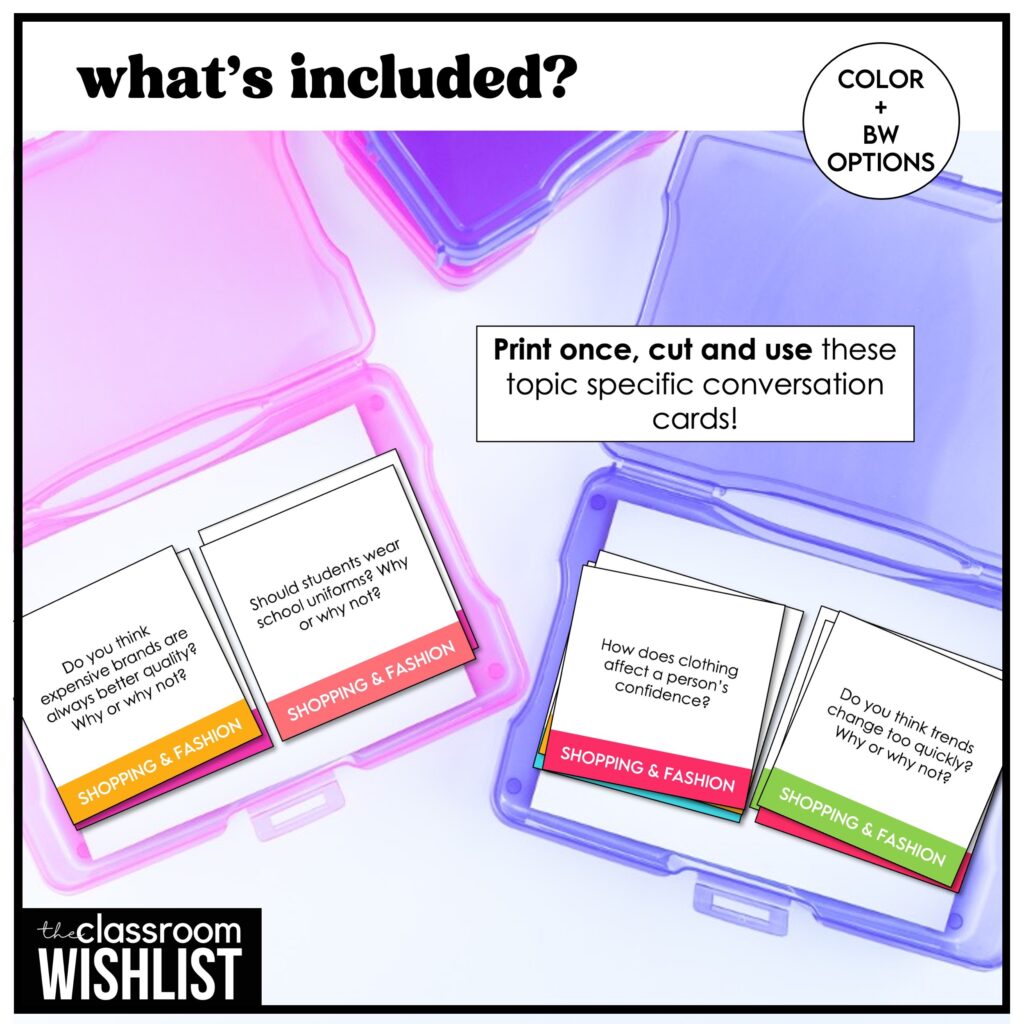
Begin each class with a quick conversation starter related to the lesson theme.
Example: If today’s topic is technology, ask:
“How has technology changed the way people communicate?”
“Do you think social media has a positive or negative impact on relationships?”
Students answer in pairs or small groups before sharing with the class.
B. Rotating Partner Conversations
Hand out different question prompts to pairs of students.
After a set time (e.g., 3-5 minutes), students switch partners and discuss a new question.
This method increases exposure to different perspectives and maximizes speaking time.
C. Debate & Opinion-Based Discussions
Use conversation cards with controversial or thought-provoking topics to encourage debates.
Example:
Laws & Government Set: “Should voting be mandatory for all citizens?”
Ethics & Morality Set: “Is it ever okay to lie?”
Divide students into agree/disagree groups and have them defend their points of view.
D. Role-Playing Activities
Assign students a role or perspective and have them use conversation cards to argue their position.
Example: In the Money & Finance Set, one student is a financial advisor, and the other is a client needing budgeting help.
Role-playing keeps the activity dynamic and practical for real-world speaking situations.
Best Topics to Engage ESL Learners in Conversations
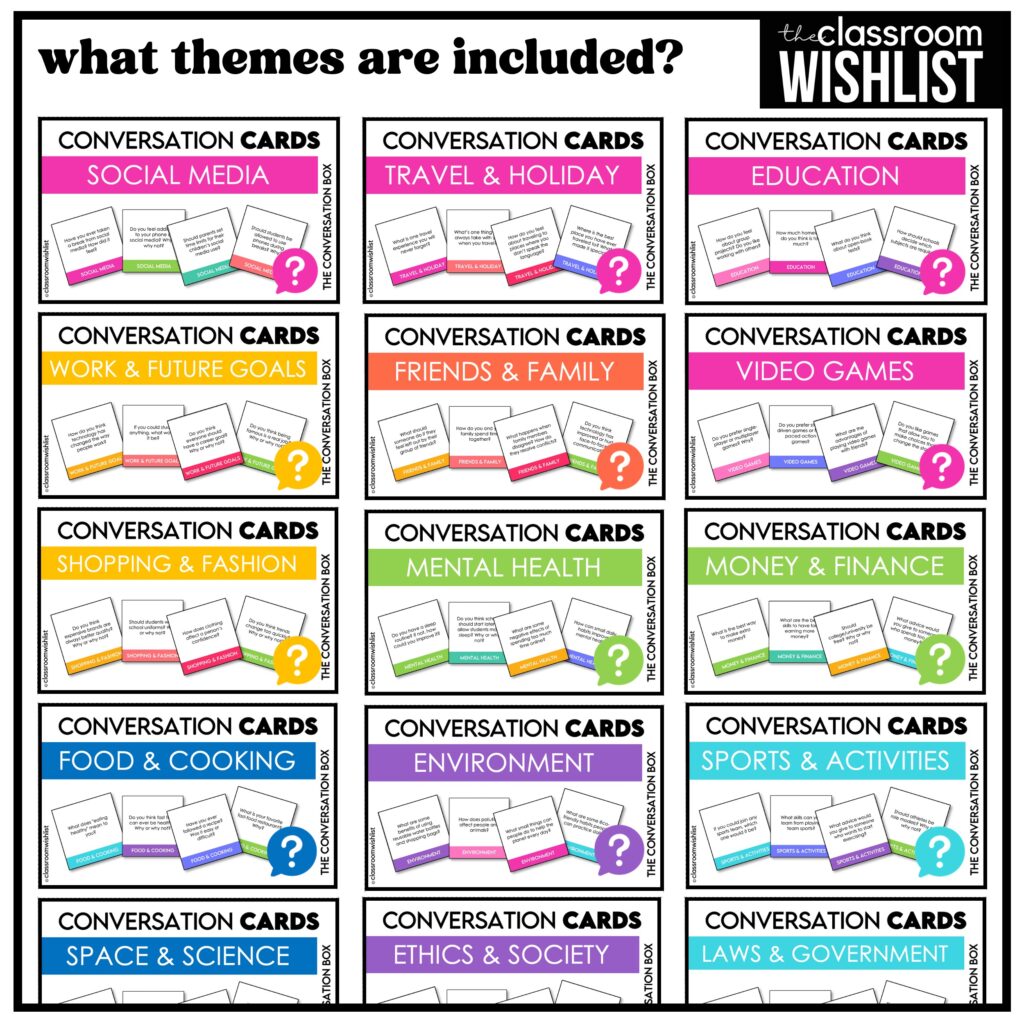
Having diverse topics keeps students engaged and motivated. The ESL Conversation Card Mega Bundle includes 16 unique sets covering topics teens and adults love discussing:
Social Media & Digital Life
Travel & Holidays
Education & School
Work & Future Goals
Friends & Family
Video Games & Entertainment
Shopping & Fashion
Mental Health & Well-being
Money & Finance
Food & Cooking
Environment & Sustainability
Sports & Physical Activities
Space & Science
Ethics & Morality
Laws & Government
Free Time and Hobbies
Each set in the ESL Mega Bundle contains 60 conversation prompts, ensuring over 1,000+ questions to keep your students engaged year-round.
How to Use This Mega Bundle in Your Classroom
Looking for an easy-to-use, print-and-go solution? The ESL Conversation Card Mega Bundle is available on Teachers Pay Teachers.
- Daily Speaking Routines: Start each class with a conversation question.
- Speaking Clubs & Conversation Corners: Use in casual, ungraded speaking sessions.
- Debate & Critical Thinking Activities: Get students forming opinions and defending them.
- Test Preparation (IELTS, TOEFL, Speaking Exams): Helps learners express thoughts clearly and confidently.
What’s Included?
✔ 16 different sets covering engaging, real-world topics.
✔ 60 questions per set (that’s over 1,000+ discussion prompts!).
✔ Color and black/white options for easy printing.
✔ Perfect for ESL, EFL, and general speaking practice.
Conclusion:
Boost Student Speaking Time with Conversation Starters
Using topic-based question prompts in your ESL classroom will increase student engagement, encourage natural discussions, and improve fluency. Instead of scrambling for discussion ideas, have ready-to-go conversation cards that students find relatable and exciting.
Want to make your next speaking lesson stress-free and highly engaging? Grab the ESL Conversation Card Mega Bundle today!


